The Gujarat High Court partly allowed an appeal involving a commercial dispute over delayed lift installation, establishing that substantial damages for breach of contract cannot rest on hypothetical projections or guesswork. Claimants must provide cogent, documented proof demonstrating actual financial loss, a direct causal link to the breach, and a credible basis for the exact figures claimed.
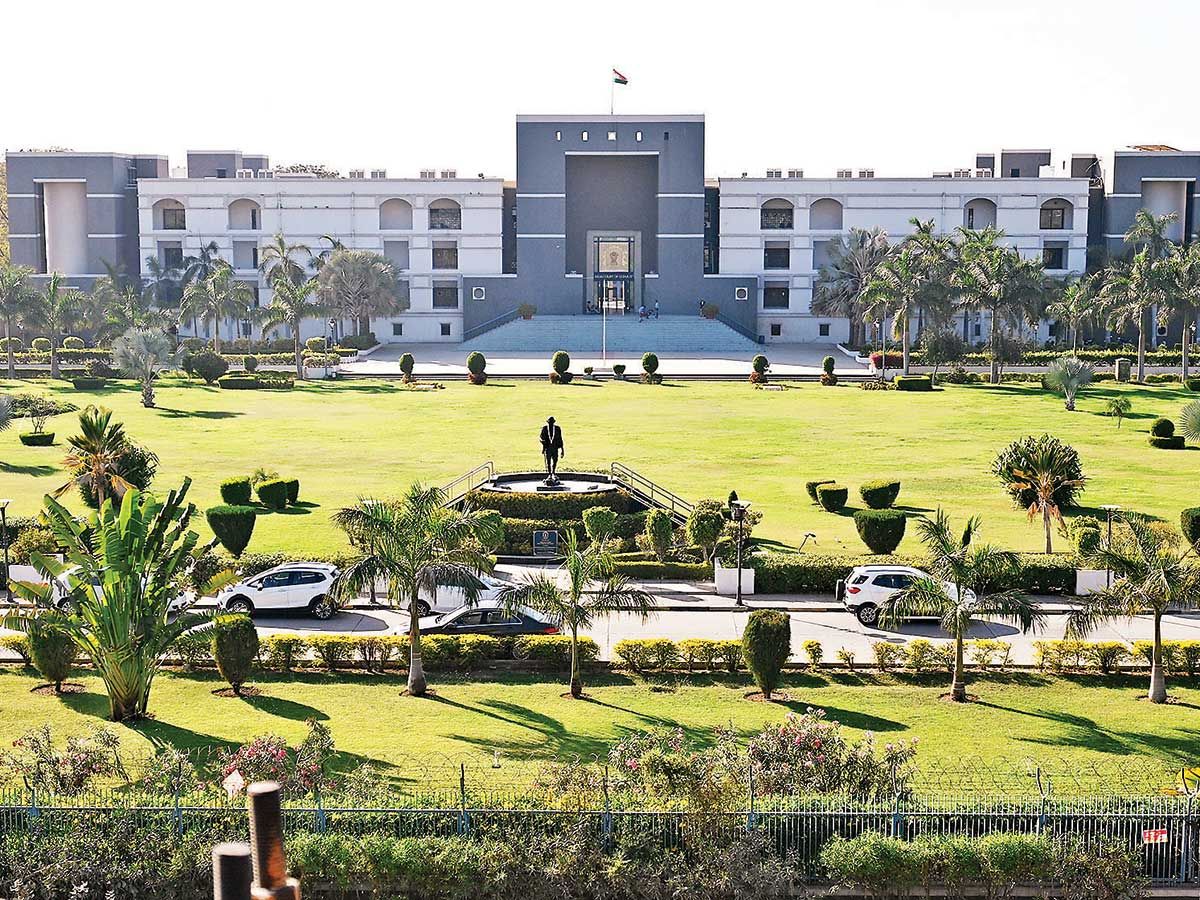
Gujarat High Court Rules That Contractual Damages Require Clear Evidence of Actual Loss
Can an injured party recover substantial damages simply because a contract was breached and projected profits failed to materialize?
The Gujarat High Court answered with a clear and resounding "no." In commercial disputes, claiming compensation requires far more than rough estimates, anticipated earnings, or bold assertions of lost business. To secure a substantial award, the claimant must place tangible, credible evidence on record proving the exact financial harm suffered and how the breach directly caused it.
This fundamental principle was underscored in Omega Elevators v. Hotel Plaza & Ors. (First Appeal No. 1237 of 2010), where the High Court substantially modified a trial court decree that had previously granted over ₹14 lakh in damages based on speculative business projections.
Background of the Dispute
The litigation traces back to an agreement executed on 27 December 1989 between Omega Elevators (the contractor) and Hotel Plaza (the commercial establishment). The contract entailed the supply, installation, and commissioning of an elevator for a new hotel project in Bharuch, Gujarat.
Agreed Value: ₹1,80,000
Agreed Timeline: 20 to 32 weeks
Regulatory Compliance: The contractor was tasked with securing the requisite No-Objection Certificate (NOC) from competent authorities.
According to the hotel owners, despite substantial payments being released, the contractor failed to deliver the required materials and abandoned the work unfinished well past the agreed timeline. Consequently, the owners contended that the inoperable elevator prevented them from launching their hospitality business on schedule.
The ₹32 Lakh Claim and the Trial Court's Verdict
Attributing their stalled business directly to the unfinished lift, the hotel owners filed Special Civil Suit No. 310 of 1992, seeking ₹32,00,000 in damages. Their claim encompassed:
Estimated loss of projected business profits;
Lost interest on capital investments; and
General commercial damages.
On 21 July 2004, the trial court partly ruled in favor of the hotel owners, awarding ₹14,84,000 alongside 9% annual interest from the date of the suit's filing until realization, plus proportionate costs.
Aggrieved by this outcome, Omega Elevators approached the Gujarat High Court in appeal, contending that the compensation granted was vastly disproportionate to the total contract price (₹1.80 lakh) and entirely unsupported by primary evidence of actual, realized financial injury.
Core Legal Issue Before the High Court
The primary question before the High Court was straightforward:
Can a claimant recover substantial contractual damages by merely demonstrating delay and asserting lost business potential, without producing concrete documentary evidence verifying the quantum, nature, and reality of the financial loss?
Key Judicial Findings: Assumptions Cannot Substitute for Proof
Upon evaluating the lower court record, the High Court held that the trial judge had awarded substantial damages without a sound evidentiary foundation.
Speculation vs. Reality: While the hotel owners argued that Bharuch’s expanding industrial sector would have guaranteed high occupancy and strong annual revenue, the Court clarified that general market potential and optimistic booking forecasts do not constitute legal proof of actual loss.
Causal Connection: A contractual delay does not automatically entitle a party to every conceivable downstream loss. The plaintiff must establish a direct, demonstrable causal chain connecting the breach to the specific monetary harm.
The Evidentiary Burden: The burden of proof rests firmly on the party seeking damages. If a business claims loss of profit, it must show real balance sheets, cancelled bookings, verifiable audit trails, or comparable operating data—not merely optimistic projections.
Landmark Precedents and Statutory Grounding
The Court grounded its reasoning in settled statutory and Supreme Court jurisprudence:
Section 73 of the Indian Contract Act, 1872: Section 73 dictates that compensation is recoverable only for losses that naturally arose in the usual course of things from the breach, or which the parties knew to be likely when contracting. It explicitly excludes compensation for remote and indirect losses.
ITC Limited v. Aashna Roy (2026 INSC 135): Reaffirmed the imperative need for trustworthy, verifiable evidence when courts assess claims for substantial commercial compensation.
H.J. Baker & Bros. Inc. v. Minerals and Metals Trading Corporation Ltd. (2023 INSC 747): Emphasized that calculating contractual damages cannot rest on conjecture; it demands an objective evidentiary record.
The Final Ruling
Modifying the 2004 trial court decree, the Gujarat High Court ruled:
The respondent hotel owners were entitled to recover only ₹25,000 (representing the actual cost of materials purchased by the plaintiff and delivered to the contractor for the project), along with 9% simple interest per annum from the date the suit was instituted until final realization.
The remaining amount from the ₹5,00,000 deposit previously furnished by Omega Elevators before the trial court—along with accrued interest—was ordered to be refunded to the contractor after adjusting the approved ₹25,000 plus interest, subject to standard identification and verification procedures.
Practical Takeaways for Commercial Contracts
This ruling offers vital lessons for businesses, legal counsel, and contractors:
Meticulous Record-Keeping: If a vendor or contractor delays a deliverable, preserve contemporaneous evidence—such as written notices, actual cancellation requests, third-party invoices, and balance sheets.
Avoid Over-Reliance on Projections: Theoretical profit models rarely hold up in court without supporting historical or market data.
Mitigation and Causation: Always document reasonable steps taken to mitigate losses and establish how the opposing party’s default directly generated the financial deficit.
Disclaimer
Disclaimer & Notice: This article is published solely for educational, editorial, and informational purposes. While every effort has been made to maintain accuracy, legal developments and judicial texts are complex; this article may contain inadvertent errors, omissions, or typographical mistakes in writing. We do not claim or warrant that the information presented herein is 100% accurate, complete, or up to date. Nothing in this post constitutes formal legal advice or creates an attorney-client relationship. Before taking any legal, business, or investment steps, readers must consult qualified legal counsel and verify all points against the original, certified judgment issued by the Gujarat High Court.